Blade Sharpening Machine
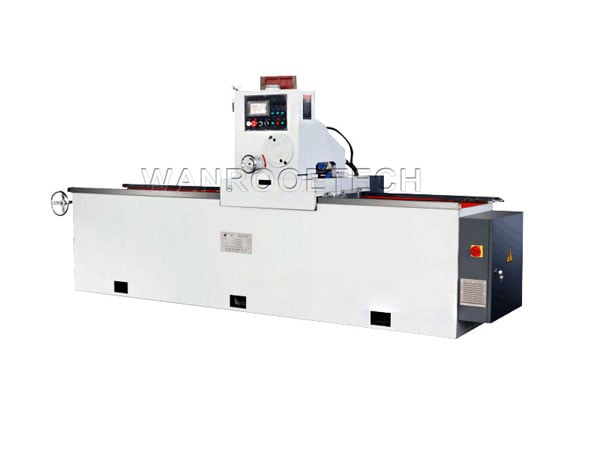
Blade sharpenner is mainly used for tool grinding in industries such as forestry, printing, paper and plastic, book printing centers, medium-sized grinding rooms, and other institutional enterprise users. It is a type of equipment for straight-line sharpening of cutting blades, turning tools, drills, carving knives, engraving and milling machines, machining centers, CNC equipment, metallurgical rolling plates, etc. It can also be used for grinding general metal end surfaces. Its working principle is mainly driven by an electric motor to rotate the grinding wheel or stone at high speed, so that the tool comes into contact with the grinding wheel or stone, achieving tool sharpening and thereby maintaining the tool’s sharpness and cutting performance.
Knife sharpening machine features:
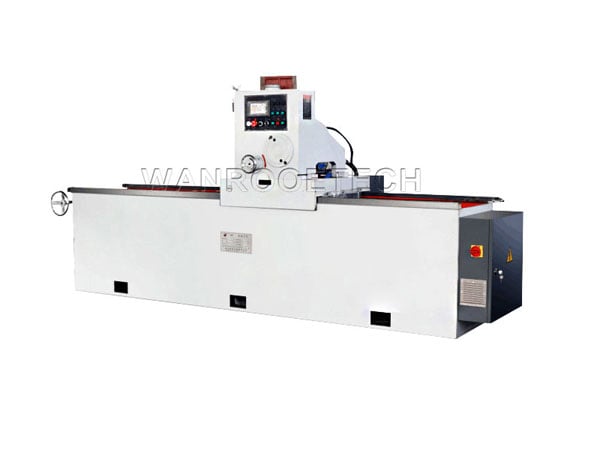
High strength body design: The grinding machine adopts a steel plate enclosed welding structure. Compared with the traditional loose frame structure, this improvement significantly increases the overall strength of the body, thereby extending the service life of the equipment and making it more durable.
Stable and reliable transmission system: The transmission part of the equipment has been upgraded from belt drive to rack drive, which overcomes the problem of uneven walking speed in the original belt drive, ensures reliability and stability, and improves grinding accuracy and efficiency.
Convenient grinding wheel head swing design: The swing angle of the grinding wheel head has been adjusted from above 90° to 30°, which makes it more convenient and faster to move workpieces and replace the grinding wheel, improving work efficiency and operational convenience.
Highly automated grinding head processing: The grinding head adopts an automatic tool feeding design, which realizes automation of the grinding process, effectively saves the manpower and time required for manual tool feeding, reduces labor intensity, and improves production efficiency.
Knife sharpening machine influencing factors:
1. Installation and adjustment impact on knife grinding
(1) The installation of the knife sharpening machine should pay attention to stability, prevent vibration, ensure fasteners are firmly connected, and the grinding disk rotates smoothly to prevent jumping and swinging. Otherwise, the blade will not be sharp and may have jagged edges.
(2) The grinding knife plate should be vertical to the horizontal plane, otherwise, the blade will not be sharpened properly.
(3) The grinding frame position should be 6mm from the disk surface, located in the middle of the disk radius. An incorrect grinding frame position can easily cause blade bias grinding. The length of the boom also affects the grinding stroke; a shorter boom will not sharpen the blade properly.
(4) For mechanical drive type knife grinding machines, the V-belt should have suitable tension, and the grinding disk should reach the rated speed. Low grinding disk speed affects the sharpening effect.
2. Influence of abrasive composition on knife sharpening
(1) Too much emery in the abrasive: the blade edge scrapes up a thick layer of emery, the edge is easy to wear, and the blade is not easy to sharpen.
(2) Too little emery in the abrasive: the blade is not easy to sharpen, blade grinding time is longer, and it is easy to anneal and deform.