PET plastic, full name Polyethylene Terephthalate, is a type of thermoplastic polyester engineering plastic. In the plastic resin identification code, it is marked as 01. In daily life, you may be more familiar with its other names: polyester resin, PET resin, or the common term “PET bottle” material.
As one of the most widely used packaging materials globally, PET is favored for food-grade plastics due to its excellent transparency, mechanical strength, and gas barrier properties. Chemically, it is produced by the polycondensation of terephthalic acid and ethylene glycol, making it a typical crystalline polymer.
Classification and Aliases of PET Plastic
| Classification | Name/Code | Description |
| Chemical name | Polyethylene Terephthalate | Abbreviated as PET or PETE |
| Recycling code | 01 | Commonly seen in the triangle on bottle bottoms |
| Industry aliases | Polyester resin, PET bottle, PET resin | “Polyester” for fibers, “PET bottle” for packaging |
| By application | Bottle-grade PET, fiber-grade PET, film-grade PET | Grades can be converted via modification |
Applications of PET Material
1.Beverage packaging
More than 70% of global carbonated drinks and water bottles are made from PET (PET bottles). Its light weight, transparency, and pressure resistance are hard to replace.
2.Textile fiber
As polyester fiber, it is used in clothing, home textiles (curtains, carpets). This is the largest single consumption direction for PET.
3.Electronics and automotive
Reinforced PET (e.g., glass-fiber reinforced PET) is used to manufacture connectors, coil formers, automotive wiper arms, and other engineering components.
4.Films and sheets
Used in solar control films, packaging films, audio and video tape bases, etc.
Market Value of PET Material
1.The global PET market exceeded US$50 billion in 2023.
2.Bio-based PET (partially derived from sugarcane) is becoming a new premium growth segment.
3.China is the world’s largest PET producer, and its polyester industry chain (PX‑PTA‑PET) plays a significant role in the national economy.
Recycling Value of PET Plastic
PET is a benchmark material for closed-loop recycling, with mature and economically viable recycling pathways.
1.Mechanical Recycling
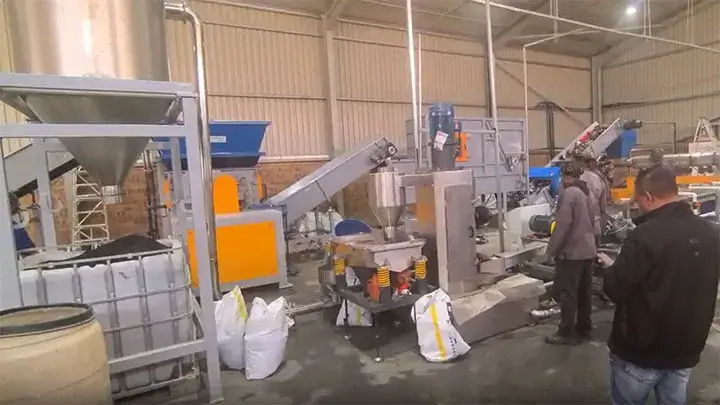
Waste PET bottles → Washing → Crushing → Melting → Recycled PET pellets (r‑PET)
→Downstream products: staple fibers (filling cotton, nonwovens), strapping bands, non-food-grade containers.
2.Chemical Recycling
Through glycolysis or hydrolysis, PET is depolymerized into monomers (dimethyl terephthalate, ethylene glycol) and then re-polymerized to obtain food-grade recycled PET. This technology completely solves the problems of discoloration and reduced viscosity that occur in mechanical recycling.
FAQ
Q1: Is PET plastic toxic?
A: PET itself is non-toxic and meets food-contact standards. However, avoid high temperatures (e.g., leaving it in the sun or filling with hot water) to prevent potential additive migration.
Q2: Are all bottles marked “01” recyclable?
A: Theoretically yes, but actual recycling rates depend on local sorting and washing capabilities. It is recommended to rinse the bottle, remove the cap and label before putting it into recyclable waste.
Q3: Are PET and polyester the same thing?
A: Chemically, they are identical. When PET is spun into fibers, it becomes polyester fiber for textiles; when injection-molded or blow-molded, it becomes plastic bottles or packaging.
Q4: Is bio-based PET biodegradable?
A: Bio-based PET is chemically the same as petroleum-based PET – it is not naturally biodegradable, but it can be recycled through existing systems. Fully biodegradable PET is still under research and development.