Application
Applicable plastic materials: PE, HDPE, LDPE, LLDPE, etc.
Material shapes: Film, bag, non-woven fabric, (PE, PP) regrind
Material types: Rolls, loose, bundled
Material sources: Offcuts, industrial defective film, and washed film.
Note: Depending on different material properties, various downstream equipment may be needed.
Working Procedure
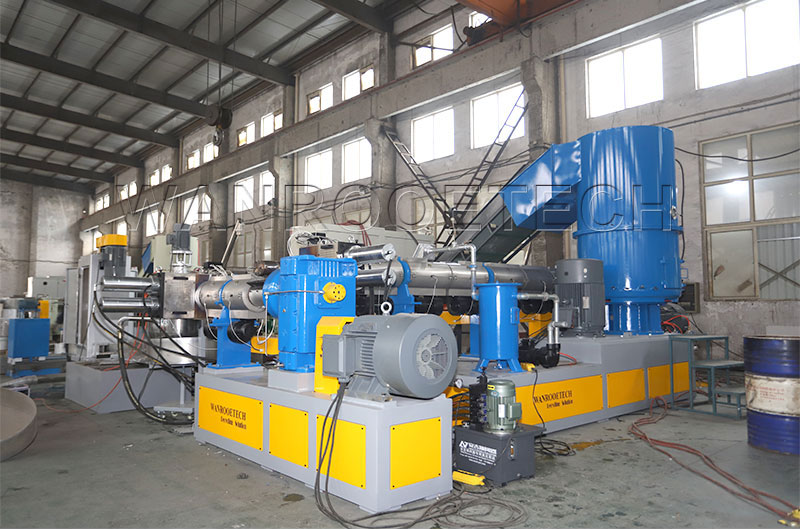
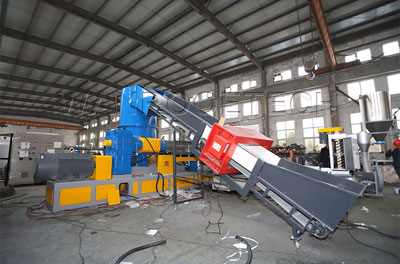
Film → Belt conveyor → Metal detector → Agglomerator/Compactor → 1# Degassing screw extruder → 1# Hydraulic screen
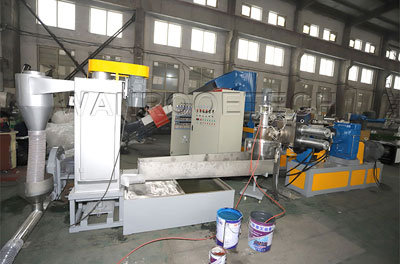
changer → 2# Screw extruder → 2# Hydraulic screen changer → Mold head → Water ring cutting → Dewatering machine →
Air dryer blowing system → Silo storage → Finished product packing
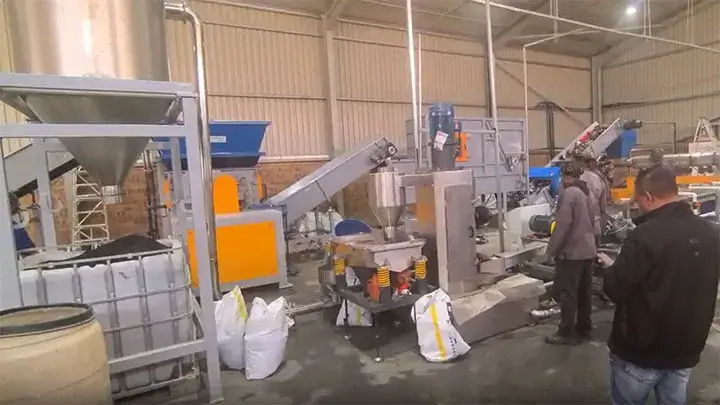
Feed film onto the belt conveyor and into the compactor for cutting, heating, compacting, and mixing, then enter the film pelletizing machine for extrusion.
Feed regrind material through the spiral charger and feeder on the extruder.
Instruction: The film and regrind material can be recycled separately or together, depending on
customers’ different needs.
Plastic Film Pelletizing Video
Features
1. High Efficiency
Compared with the primary design, the output of the PE LDPE HDPE LLDPE film pelletizing line has been increased by
20%.
2. Low Power Consumption
Power consumption is reduced by 15% compared with the primary design.
3. Highly Automatic
Only two people are needed for one granulating production line.
Detailed Components
|
|
|
|
Belt Conveyor As a standard design, plastic scraps such as film, filament, and raffia are conveyed into the Motor drives of the conveyor belt and hauling device cooperate with ABB inverters. The feeding speed A metal detector can be combined with the belt conveyor and can interlock with the control system to |
Extruder A specialized single screw extruder is used to gently melt the pre-compacted material. The plastic With a double-zone vacuum degassing system, volatiles such as low molecular compounds and moisture |
|
|
|
|
Water-Ring Die-Face Cutting System Water-ring die-face or strand cutting methods are typically adopted. In the water-ring die-face The rotary speed of the blades is automatically adjusted by a module system according to melt |
Vibration Drying System An advanced dewatering vibration sieve combined with a horizontal-type centrifugal dewatering system It combines crushing, compacting, and pelletizing steps into one system, resulting in lower labor |
Get a Professional Answer for Your Needs
To better provide you with a professional solution, please describe your parameters or technical requirements (such
as processing materials, output size, capacity, etc.) when sending an inquiry. We will reply to you as soon as
possible.