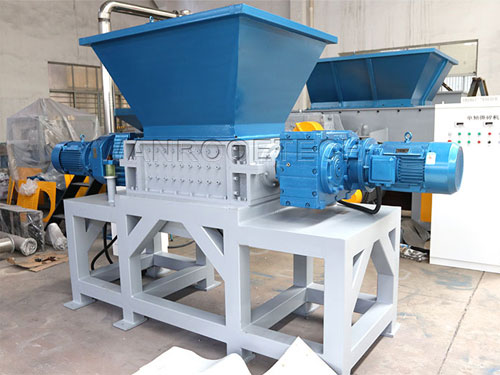
At present, there are many types of shredding machines. Our company mainly produces twin shaft shredder machines, single shaft shredding machines, metal shredding machines, tire shredding machines and so on. However, motor overheating can occur when a twin shaft shredder machine is used. There are many factors that can cause the shredder motor temperature to be too high. After the motor heats up, the insulation temperature of the motor winding will rise. Insulation reacts very strongly to high temperature, which will accelerate aging and reduce service life. If the temperature rise is too high, it will carbonize the insulation, causing loss of insulation effectiveness, and the motor windings will short circuit, causing the shredding machine to fail. Therefore, inspection, detection and protection of motor overheating faults are very important to reduce the accident rate, reduce accident loss and improve the economic benefit of enterprises.
So, how should we detect motor overheating:
1. Thermometer method: measure the temperature rise of the motor directly with a thermometer.
2. Touch method: touch the specified part of the motor by hand, and estimate the motor temperature according to the intensity of heat felt.
3. Resistance method: measurement using the principle that conductor resistance increases with temperature rise.

So how should we deal with the motor overheating of twin shaft shredder machine?
Overheating of the double shaft shredder motor requires comprehensive treatment from three aspects: mechanical, electrical, and environmental. In terms of mechanical aspects, check the air gap between the stator and rotor, and adjust the end cover gasket if the gap is too small; check the lubrication and wear of bearings, clean up impurities that have infiltrated the material to prevent insulation damage, and replace bearings and replenish lubricating grease if necessary. In terms of electrical aspects, calibrate the power supply voltage to the rated range, troubleshoot winding short circuits or open circuits, and conduct a withstand voltage test after repair; strengthen phase loss protection, check fuses and contactors, and install electronic protection modules. In terms of environment, clean the dust on the heat sink, ensure smooth ventilation, check the fan blades, and install forced cooling devices in high-temperature environments; control the load to avoid overload, use a variable frequency feeder to adjust the feeding speed, and install a torque limiter. When handling, it is necessary to immediately shut down the machine and cut off the power. Follow the steps to troubleshoot, repair, and conduct a no-load trial run to monitor the status. Record the fault report and update the maintenance file. Through systematic disposal, the overheating problem can be effectively solved, ensuring the stable operation of the equipment.