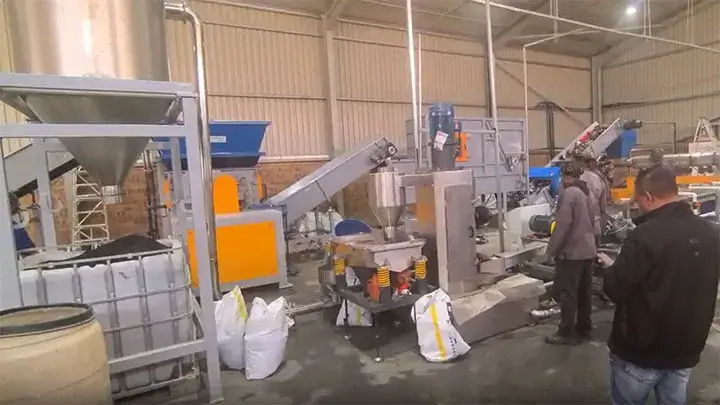
Plastic Extruder Operating Procedures and Safety Guidelines
1. Pre-Start Inspection
Before starting the extruder, check the inside and outside of the barrel and ensure there is no foreign matter in or
around the hopper.
Check whether the fastening bolts on each part are loose, whether the safety cover is secure, and whether each button
switch is in the correct position.
Add enough lubricant to each lubrication point and clean the equipment.
2. Notify Staff Before Startup
When preparing to turn on the extruder, notify all staff members around the equipment.
3. Start the Screw Motor at Low Speed
Start the drive screw rotation motor at low speed and check whether the main motor’s ammeter pointer swings normally.
If the equipment operates abnormally or the screw runs unstably, stop immediately and have relevant personnel repair
and resolve the issue.
4. Screw Test Run and Mold Installation
The screw test run shall not exceed 3 minutes. After confirming that everything is normal, install the mold and
tighten the connecting bolts.
Before use, apply a layer of molybdenum disulfide or silicone oil to the mold for easy disassembly.
5. Initial Feeding
At the initial stage of feeding, set the screw to the lowest working speed, and feed material slowly and uniformly.
Check whether the ammeter pointer of the motor driving the screw swings abnormally.
6. Temperature Monitoring During Production
After the extruder enters normal production, the operator should regularly check the temperature changes of the
bearings and motor.
When inspecting temperatures, gently touch the inspection area with the back of your finger. Do not touch any
rotating parts with your hands while the equipment is in operation.
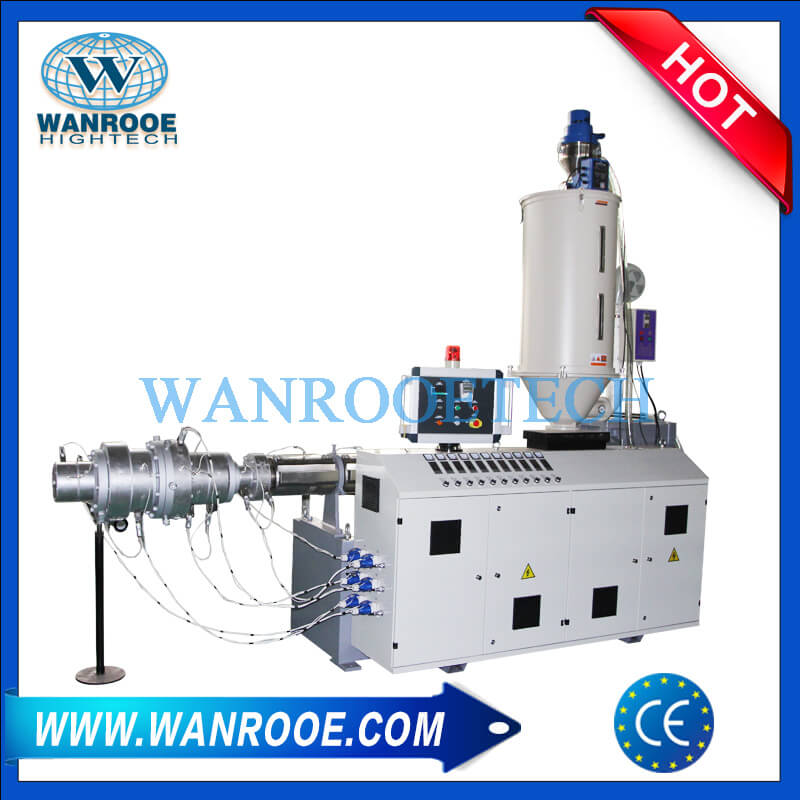
7. Disassembling and Installing Screw and Mold
When disassembling or installing the screw and mold, do not hit the parts directly with a heavy hammer. If necessary,
use a hardwood block to tap for removal or installation.
8. Cleaning Residual Material
When cleaning residual material from the screw, barrel, and mold, use bamboo tools, a copper knife, or a brush. Do
not scrape with steel tools or use fire to clean the parts.
9. Failure Handling and Safety Precautions
When handling extruder failures, the extruder must not be running. While the screw is rotating and the mold is being
adjusted, the operator must not face the extrusion barrel to prevent accidents.
10. Operator Attendance
The operator is not allowed to leave the workstation while the extruder is in production. If it is necessary to
leave, the extruder should be stopped.
11. Post-Stop Screw Maintenance
After stopping, disassemble the screw and clean off residual material. Apply a layer of anti-rust oil. If the screw
will not be used for a while, wrap it and hang it vertically in a dry, ventilated place.
12. Long-Term Storage of Extruder and Molds
If the extruder and molding dies are not used for a long time, apply anti-rust oil and seal the inlet and outlet
holes to prevent foreign matter from entering.
Get a Professional Answer for Your Needs
To better provide you with a professional solution, please describe your parameters or technical requirements (such
as processing materials, output size, capacity, etc.) when sending an inquiry. We will reply to you as soon as
possible.