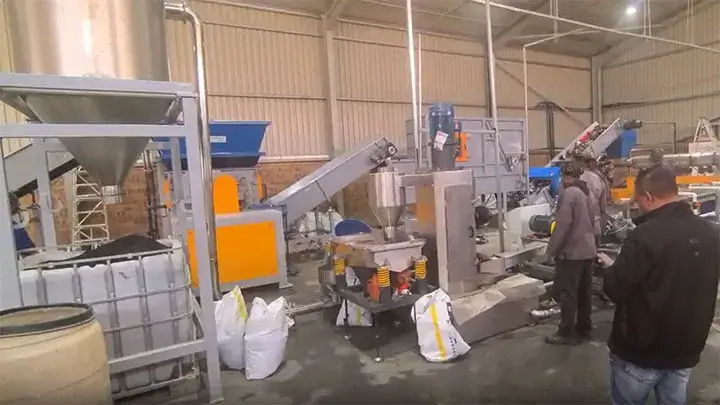
Importance of Plastic Crusher Blades
The plastic crusher blade is an important component of the plastic crusher. Its type and material directly affect the crushing efficiency and service life of the equipment. Therefore, selecting the appropriate plastic crusher blade is crucial.
Plastic Crusher Blade Types
There are two main types of plastic crusher blades: flat blades and claw blades. The flat blade is primarily used for cutting and crushing plastic materials and is suitable for soft and tough plastics such as PP and PE.
The claw blade is mainly used to impact and break plastic materials and is suitable for hard and brittle plastics such as PVC and PS.

Factors to Consider When Selecting Blades
When selecting a plastic crusher blade, multiple factors must be considered, including the type of plastic, processing conditions, blade material, service life, and wear resistance. Below are key selection criteria:
1. Select Blade According to Plastic Type
Different types of plastics have varying hardness and toughness. The appropriate blade material and geometry should be chosen based on the specific plastic being processed. For hard plastics, a claw blade is recommended; for soft plastics, a flat blade is more suitable.
2. Select Blade According to Processing Conditions
Different processing conditions impose different requirements on the blade. For production lines with higher output requirements, blades with high cutting efficiency and wear resistance should be selected. For applications requiring higher processing precision, blades with tighter dimensional tolerances are recommended.
3. Selection Based on Blade Material
Blade material is a critical factor affecting blade performance and service life. Common blade materials include tool steel, alloy steel, carbide, and ceramic. Different materials offer varying hardness, wear resistance, corrosion resistance, and other characteristics. Selection should be based on actual operational needs.
4. Selection Based on Service Life
Blades from different brands and quality levels have different service lives. When selecting blades, consider their expected service life and replacement cycle so that worn blades can be replaced in time, ensuring stable operation of the production line.
5. Selection Based on Economic Cost
When selecting a plastic crusher blade, factors such as blade price and processing cost must be considered. On the premise of ensuring product quality and performance, cost-effective blades with reasonable pricing should be prioritized.
Conclusion
In summary, selecting a suitable plastic crusher blade requires consideration of multiple factors, including plastic type, processing conditions, blade material, service life, and wear resistance. Enterprises should evaluate their actual production needs and consult professional technicians to select the most appropriate blade material and brand.
Get a Professional Answer for Your Needs
To better provide you with a professional solution, please describe your parameters or technical requirements (such as processing materials, output size, capacity, etc.) when sending an inquiry. We will reply to you as soon as possible.