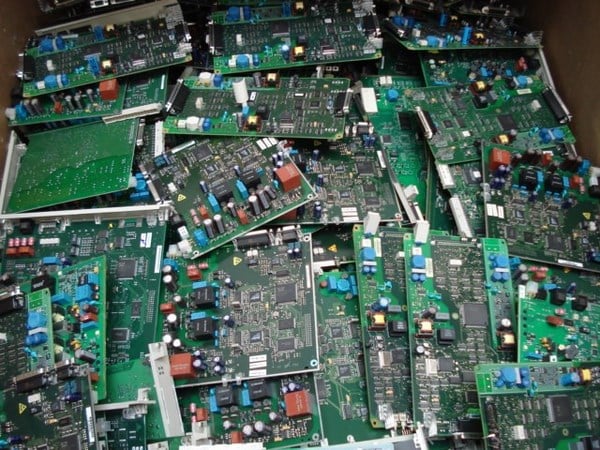
The Value of PCB Circuit Boards Recycling
Research on standard PCB boards shows that the proportions of electronic components, baseboard, and soldering tin are
58%, 37%, and 5% respectively.
For every one ton of baseboard, it includes about 40% metal materials and 60% nonmetals, which contain almost all the
common elements in the periodic table.
By estimate, one ton of computer circuit boards contains 0.5 kg of gold, 130 kg of copper, 10 kg of iron, 60 kg of
lead, 40 kg of tin, 36 kg of nickel, 40 kg of antimony, and other rare precious metals such as platinum and
palladium.
How to Recycle PCB Circuit Boards?
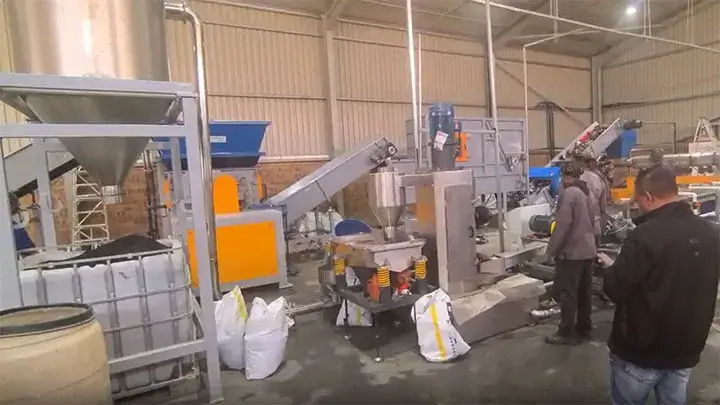
Waste PCB circuit boards are separated from electronic components and solder using a PCB dismantling machine. The
circuit board, after removing the electronic components, is shredded into sheet materials by a shredder. It is
further processed by hammering and crushed into small pieces.
The small pieces are ground into powder by a mill to achieve the separation of copper and plastic in the PCB. Through
specific gravity separation under airflow, different physical reactions caused by different densities separate
copper from plastics.
Through electrostatic separation and adsorption, insulators and non-insulators are separated to obtain the separation
of copper and plastics. Pulse dust removal is used to filter dust from the waste to meet emission requirements.
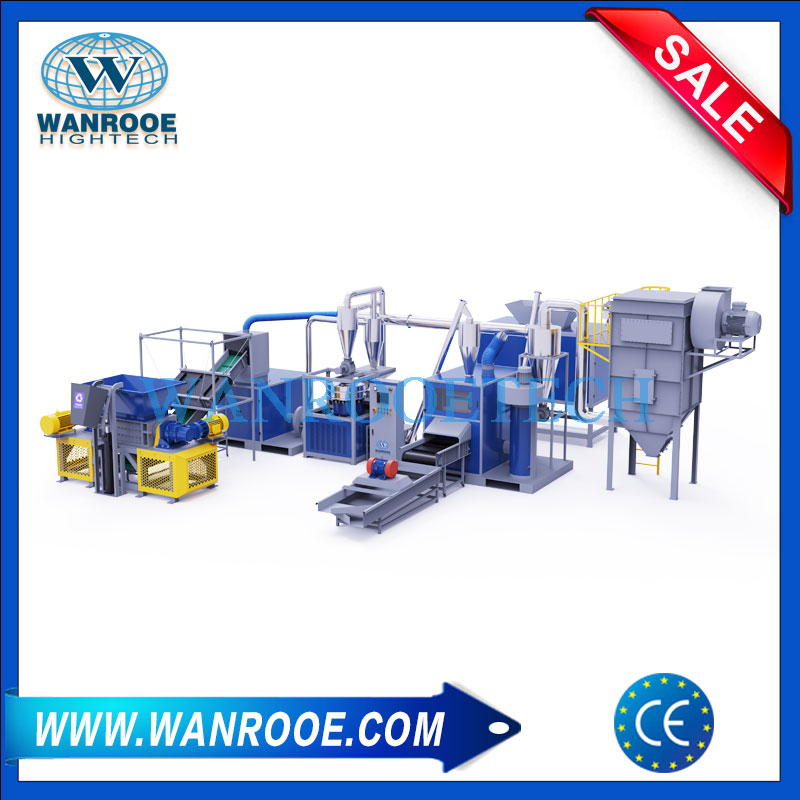
Waste PCB Board Recycling Machine
A waste PCB board recycling production line can be used for recycling all kinds of circuit boards and motherboards,
including aluminum plastic plates, copper clad boards, printed circuit boards, and TV boards.
Metals are recovered with high efficiency, and the recovery rate is up to 99%. Different kinds of metals and
non-metals present in scrap need to be refined and separated into separate containments, which is accomplished by
waste PCB recycling equipment.
Working Principle of Waste PCB Board Recycling Machine
First, PCB recycling machinery reduces the material to a mixture of metallic and non-metallic powder through two
stages of mechanical pulverization. After that, the mixture is completely separated into metals and non-metals by
air separation technology.
This complete process is performed in one production line, and its fully closed operation ensures avoidance of any
kind of pollution and noise.
Raw materials that can be easily processed by waste PCB recycling machines include waste printed circuit boards with
or without electrical components, as well as copper clad plates.
Circuit boards come from various kinds of electrical equipment, including televisions and computers. Green boards
come from televisions, communication equipment, computers, and other high-value equipment, while yellow boards are
found in tape recorders, audio equipment, air conditioners, washing machines, and other low-value equipment.
Characteristics of PCB Board Recycling Machine
Following are some significant characteristics of circuit board recycling machines:
- It reduces power consumption.
- It produces very little or no noise, thus reducing noise pollution.
- It has good performance and completes the recycling process with great efficiency.
- It has a unique effect on computer and television circuit boards, recycling them and leaving the product in good condition, making the circuit boards reusable.
- It reduces manual labor and speeds up the recycling and production rate of circuit boards.
- It covers a relatively smaller surface area.
- It adopts a dust collection method which helps keep the environment clean.
- It does not emit any harmful gases or chemicals during circuit board recycling.
- It has a clean surface and produces comparatively lower noise than other recycling methods.
- It uses high automation procedures and can work a full day without stopping, allowing processing of a large number of circuit boards in a short time.
Conclusion
The working principle and characteristics of e-waste recycling machines and motherboard recycling machines help us
understand the benefits and mechanisms that make the recycling process fast and efficient by reducing manpower and
pollution.
Get a Professional Answer for Your Needs
To better provide you with a professional solution, please describe your parameters or technical requirements (such
as processing materials, output size, capacity, etc.) when sending an inquiry. We will reply to you as soon as
possible.