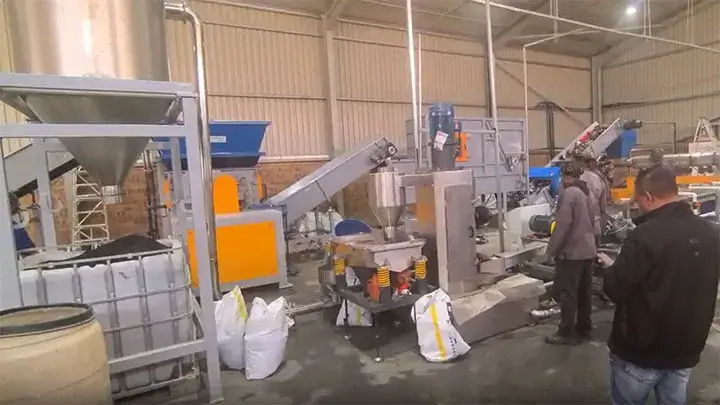
Overview of Plastic Crushers
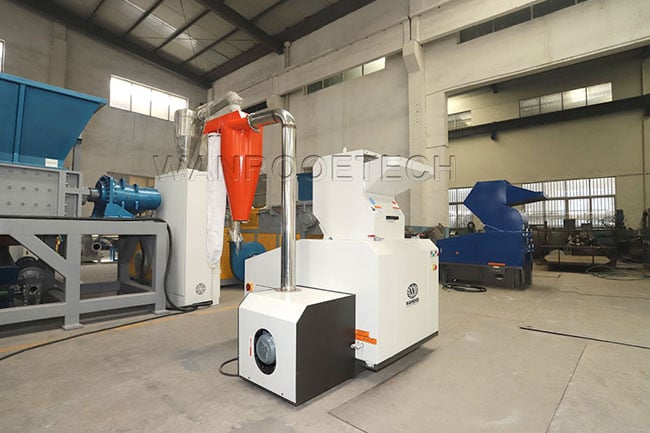
Plastic crushers, also called plastic grinders, are designed to crush and recycle various types and shapes of plastic products. They are also a type of peripheral equipment for injection molding machines.
The crusher can crush and recycle defective products and sprue material generated by injection molding machines. It can be used in conjunction with recyclers, dryers, and other equipment to form a complete rapid recycling system.
Working Principle
As the name implies, a plastic crusher is a machine that crushes plastic material. While raw materials are being processed by injection molding machines or pelletizing machines, defective products and sprue material can be promptly fed into a plastic crusher placed beside the machine.
After crushing, the material remains clean and dry. Using a proportional valve for recycled material, the raw materials and crushed sprue are mixed in a fixed proportion, then molded into good products, achieving effective recycling.
Operating Notes for Plastic Crushers
1. Pre-Start Procedure
Before starting, manually rotate the transmission wheel once or twice to confirm that movement is flexible, then start the machine. Wait for the crusher to run normally before feeding material.
2. Shutdown Procedure
Before stopping operation, cease feeding and discharge any material remaining in the machine, then cut off motor power.
3. Bearing Temperature and Vibration Monitoring
Pay attention to bearing temperature during operation. Ensure bearings are well lubricated, and listen for abnormal sounds or vibrations.
When an abnormal condition is detected, stop the machine to check whether it is jammed by unbreakable objects or whether machine parts are damaged.
4. Feeding Uniformity and Contaminant Prevention
Maintain uniform feeding to prevent overload. Prevent unbreakable objects such as metal and wood from entering the machine.
When feeding material that cannot be crushed, the feed moisture content should not be too high. For wet crushing operations, maintain the proper water volume to prevent blockage due to insufficient flushing water and reduced production capacity.
5. Product Particle Size Inspection
Check whether the particle size of the crushed product meets the required specifications. If too many particles exceed the specified size, identify the cause (such as excessive screen bar gap, excessively wide discharge opening, hammer wear, etc.) and take appropriate corrective measures.
6. Shutdown Inspection
When the crusher is stopped, check whether the fastening bolts are secure and inspect the wear condition of easily worn parts. For tooth-type crushers, use the stop opportunity to remove any wood caught between the teeth.
7. Worn Parts Replacement
Worn parts should be replaced or repaired in a timely manner.
8. Safety Device Maintenance
The crusher’s safety devices must be maintained in good working condition. Never take shortcuts that would render the safety devices ineffective.
Get a Professional Answer for Your Needs
To better provide you with a professional solution, please describe your parameters or technical requirements (such as processing materials, output size, capacity, etc.) when sending an inquiry. We will reply to you as soon as possible.