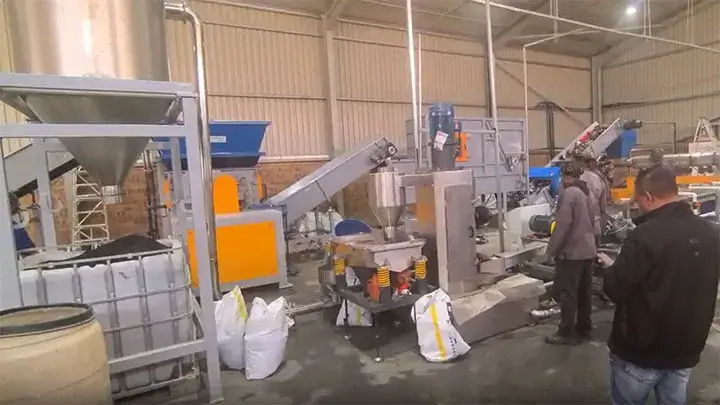
High-speed mixer consists of pot body, pot cover, transmission parts, base, discharge port and other components. It can easily realize the auxiliary requirements of heating, cooling, explosion-proof, liquid spraying atomization, etc. It is the ideal equipment for laboratory as well as production use. The barrel body is made of high-quality stainless steel, the inner wall is polished by fine polishing, not easy to stain, will not have a chemical reaction with the material, safe and reliable. The inner wall is also equipped with a guide plate to enhance the mixing effect. The barrel is equipped with a temperature thermocouple, so the material temperature can be intuitively reflected on the temperature control table in the electrical box. The temperature control table is also used to automatically discharge when the specified temperature is reached.

High-speed mixers are already mature and popular equipment in the plastics chemical industry, but some users still do not fully understand certain usage methods. Here, Wanrooe Machinery explains the most commonly used feeding and discharging methods for today’s high-speed mixers.
First, plastic mixer feeding methods
1.1 Manual pouring: This method is used for small and medium-sized equipment. For mixers larger than 200L, this method is not recommended due to equipment height inconvenience. Additionally, the one-time feeding amount is large, which may be strenuous for individual production operators.
1.2 Feeder feeding: A more common feeding method for high-speed mixers. The operator unpacks and pours material into the screw feeder. The material is transported directly from the small hopper into the mixer barrel. This method is not limited by equipment height, has fast conveying speed, and the feeder price is also affordable.
1.3 Negative pressure conveying: Negative pressure conveying is also called a vacuum powder feeding machine. It is generally equipped in mixer units for complete equipment systems. Its conveying process produces no powder flying and can effectively control the production environment.
Second, mixer discharge methods
2.1 Feeder buried: The most standard discharge arrangement method. A pit is dug at the discharge port location, and the screw conveyor is pre-buried in it. The mixed finished powder is directly conveyed by the conveyor to the storage bin.
2.2 Mixer heightening: This method can avoid digging holes. Communication with the manufacturer in advance is required to raise the high-speed mixer’s height so that a feeder can fit under the discharge port. The heightening amount is limited; too high will cause equipment instability.
2.3 Short feeding machine: Generally used for small and medium-sized high-speed mixers. The screw feeder is made short to adapt to the height of the mixer discharge port. Storage capacity is limited; if material is not discharged in time, it may cause the feeding machine to accumulate too much material.
In order to better provide you with a professional answer, when sending an inquiry, please describe your parameters or technical requirements (such as processing materials, output size, capacity, etc.). We will reply to you as soon as possible!