Introduction: The Challenge of Recycling Fiberglass
Fiberglass as we know it has been around since the early 1930s. It is a highly versatile product that can be made
with virgin or recycled glass. Uses abound; you will find it in everything from home insulation to cars, surfboards,
and sporting equipment.
In the 80 years since fiberglass was invented, however, only one company has come up with a way to recycle it.
Unfortunately, its services are not very widespread, so what are the rest of us to do? In most cases, the answer is
probably to put it in the trash.
What Is Fiberglass?
Fiberglass is exactly what it sounds like: a material made of thin glass fibers woven together. It is composed of
silica, sand, and other naturally occurring materials typically found in glass.
There are several different types of fiberglass, all of which are made with slightly different machinery. Each of
those machines has one thing in common, though: they take molten glass and spin it into the material we use in our
homes and businesses.
One of the main uses for fiberglass is building insulation (although fiberglass “wool” can also be used to line
submarine bulkheads, engine compartments in cars, and air conditioners).
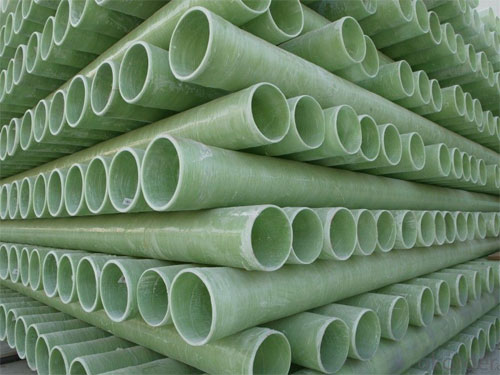
Fiberglass that is harder and resembles plastic can be used for boats, sports helmets, storage buildings, and many
other products. Surfboard manufacturers often combine fiberglass “cloth” with a resin to make their boards.
Benefits and Disadvantages of Fiberglass
Benefits
There are many benefits to using fiberglass. The material is very strong, lightweight, and relatively inexpensive. It
is not made of petrochemicals (unlike plastic) and will not corrode, even when exposed to saltwater (unlike metal).
Fiberglass insulation is water and fire resistant, good at absorbing sound, and excellent at keeping your house cozy
and warm.
Disadvantages
Most types of fiberglass insulation contain formaldehyde, an extremely toxic chemical (although formaldehyde-free
products are available from manufacturers like Johns Manville, or JM). If that insulation ends up in a landfill, the
formaldehyde will leak out over time.
Fiberglass must be handled carefully — all those tiny strands of glass can cause cuts and rashes. If you have to cut
fiberglass batts or use blown-in insulation and accidentally inhale those tiny glass particles, they can cause
health problems.
It is very important to use proper safety equipment when working with fiberglass, including gloves, long shirts and
pants, goggles, and a respirator.
How to Recycle Fiberglass
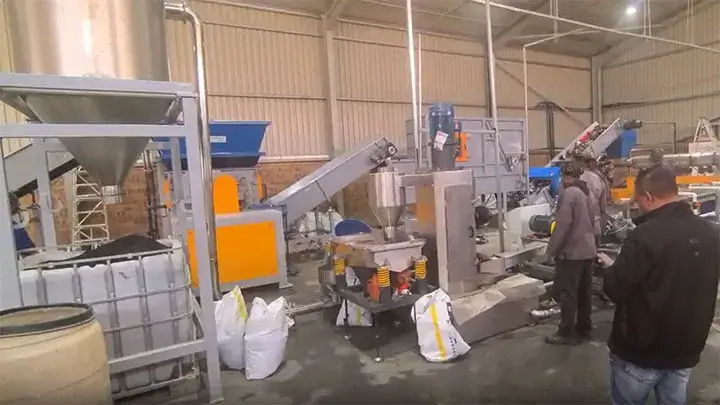
The glass fiber recycling process achieves efficient regeneration through multi-stage mechanical processing:
Large-sized waste is roughly crushed by shearing equipment and then enters the composite crushing system for
refinement and preliminary separation of impurities. Subsequently, intelligent screening and air separation
technologies are used to perform multi-stage particle sorting, improving fiber purity.
The graded materials undergo deep cleaning to remove surface contaminants, and ultimately finished product quality is
ensured through automated quality control.
The process integrates pre-processing, crushing, sorting, and purification modules, matched with online monitoring
and environmental protection treatment systems. This can flexibly adapt to different production capacity
requirements, produce high-quality recycled glass fiber raw materials, and directly use them for composite material
remanufacturing, achieving efficient resource recycling and green production.
Substitutes for Fiberglass Insulation
There are many high-quality alternatives to fiberglass insulation materials. Modified short fibers can improve the
performance of engineering plastic products, reduce costs, and have a wide range of applications.
Basalt fiber has high strength, corrosion resistance, good insulation, and low production pollution, and is widely
used in fields such as construction, automotive, and aerospace.
Natural plant fibers such as ramie fibers have excellent thermal stability and flame retardancy after flame retardant
modification and can be used in fields such as construction and electronics.
There are also recycled materials, such as waste denim fiber, which are environmentally friendly, easy to process,
low-cost, and formaldehyde-free, and can be used to make practical items such as kitchen insulation pads.
Get a Professional Answer for Your Needs
To better provide you with a professional solution, please describe your parameters or technical requirements (such
as processing materials, output size, capacity, etc.) when sending an inquiry. We will reply to you as soon as
possible.