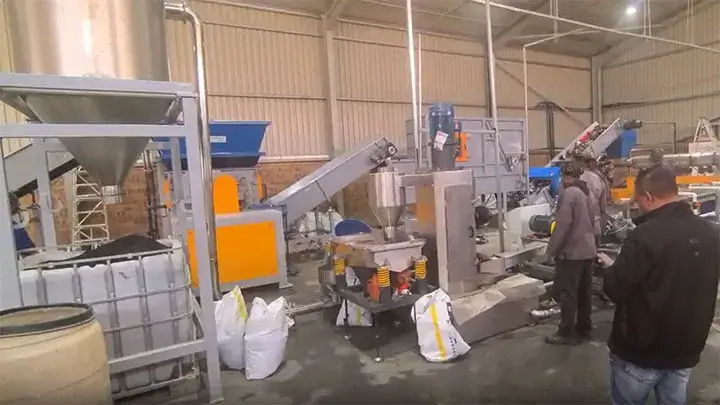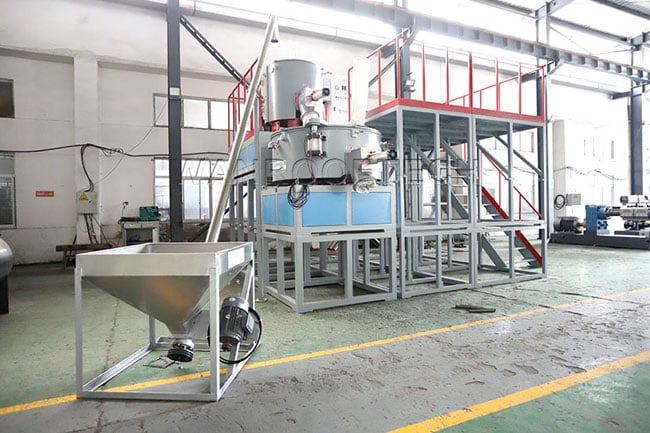
Currently, many users have numerous choices when it comes to powder mixing equipment, including domestic vertical cone mixers. However, experts suggest that due to the many shortcomings of vertical cone mixers and their high repair rate, a horizontal mixer should be chosen for powder/powder or granular material blending.
Horizontal mixers offer high mixing efficiency, good mixing quality, short discharge time, and low residual material. However, the following points should be noted when selecting and using a horizontal plastic mixer.
1. Select a Horizontal Mixer According to Daily Production Requirements
The processing time for each batch of material in the mixer is approximately 10 minutes. Adding discharge and feeding time, the total processing time per batch is about 15 minutes. Therefore, 4 batches can be processed continuously per hour.
If you choose a mixer with a processing capacity of 100 kg per batch, it can process 400 kg per hour. Users should select a horizontal plastic mixer based on their own production needs.
2. Understand the Working Principle of the High-Speed Mixer
The double spiral belt used for stirring and mixing must push materials in opposite directions with basically consistent force. Since the pitch of the inner spiral belt equals that of the outer spiral belt, the width of the inner spiral belt should be larger than that of the outer spiral belt to achieve the same material-pushing ability. Otherwise, materials will concentrate in one direction.
This factor should be considered when selecting a horizontal mixer.
3. Pay Attention to the Gap Between Spiral Belt and Shell
According to design principles, the gap between the spiral belt and the shell in a high-speed mixer can range from 4 mm to 10 mm. Materials can be driven to participate in mixing through friction. However, due to different particle sizes and friction coefficients, the mixing time for various components may vary, resulting in uneven products.
Some manufacturers have recognized this issue and made improvements. One improvement is to enhance machining accuracy so that the bottom gap is reduced to approximately 3 mm. Another is to make the position between the spindle and the shell adjustable, allowing the gap between the spiral belt and the shell to be adjusted according to wear. When selecting a mixer, products with these features should be preferred.
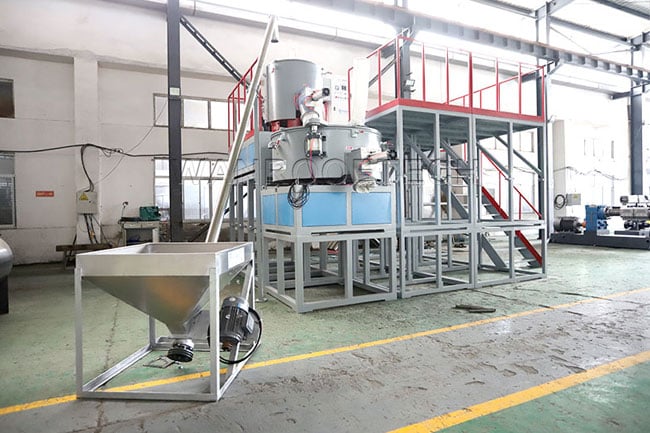
4. Consider the Discharge Mode When Choosing a High-Speed Mixer
Communicate with the supplier in time to select the valve type suitable for your specific process. Avoid choosing the side outlet configuration.
When the mixer finishes mixing within the specified time, uniformity can be guaranteed by discharging the entire batch quickly. If a side outlet with a spiral belt is used for gradual discharge, two problems arise. First, discharge time is prolonged, failing to achieve expected productivity. Second, the material has already reached uniformity, and excessive stirring can cause material segregation, destroying uniformity and defeating the purpose of selecting a horizontal mixer.
5. Observe the Correct Feeding Sequence When Using a Horizontal Mixer
Generally, base materials such as corn flour and soybean meal powder should be added first, followed by premix components. Note that premix must not be fed using a screw conveyor. Instead, use a one-time tipping bucket or manual feeding to avoid segregation and loss of active components in the premix.
6. Start the Mixer Before Feeding Each Batch
When using a horizontal mixer, feed batch by batch after the mixer has been started. Do not stop the machine after mixing and discharging, then add a new batch of material before restarting.
If you start the mixer under full load, the power draw will be excessive and the motor may burn out.
Get a Professional Answer for Your Needs
To better provide you with a professional solution, please describe your parameters or technical requirements (such as processing materials, output size, capacity, etc.) when sending an inquiry. We will reply to you as soon as possible.